Business Communications
Modern Business Communications That Keep Teams Connected
Communication is the foundation of customer experience, employee productivity, and operational success.NETIT helps organizations evaluate and optimize communication solutions that support collaboration, responsiveness, and business continuity.
Business Communication Services
Gain Clarity Before Making Technology Decisions
Today's organizations rely on communication systems that extend far beyond traditional phone service.From VoIP platforms and unified communications to messaging, call routing, and multi-location connectivity, businesses need communication solutions that support how they operate today.NETIT helps organizations navigate available options and identify communication technologies that align with operational needs and future growth.
WHTA WE EVALUATE
Solutions We Help Evaluate
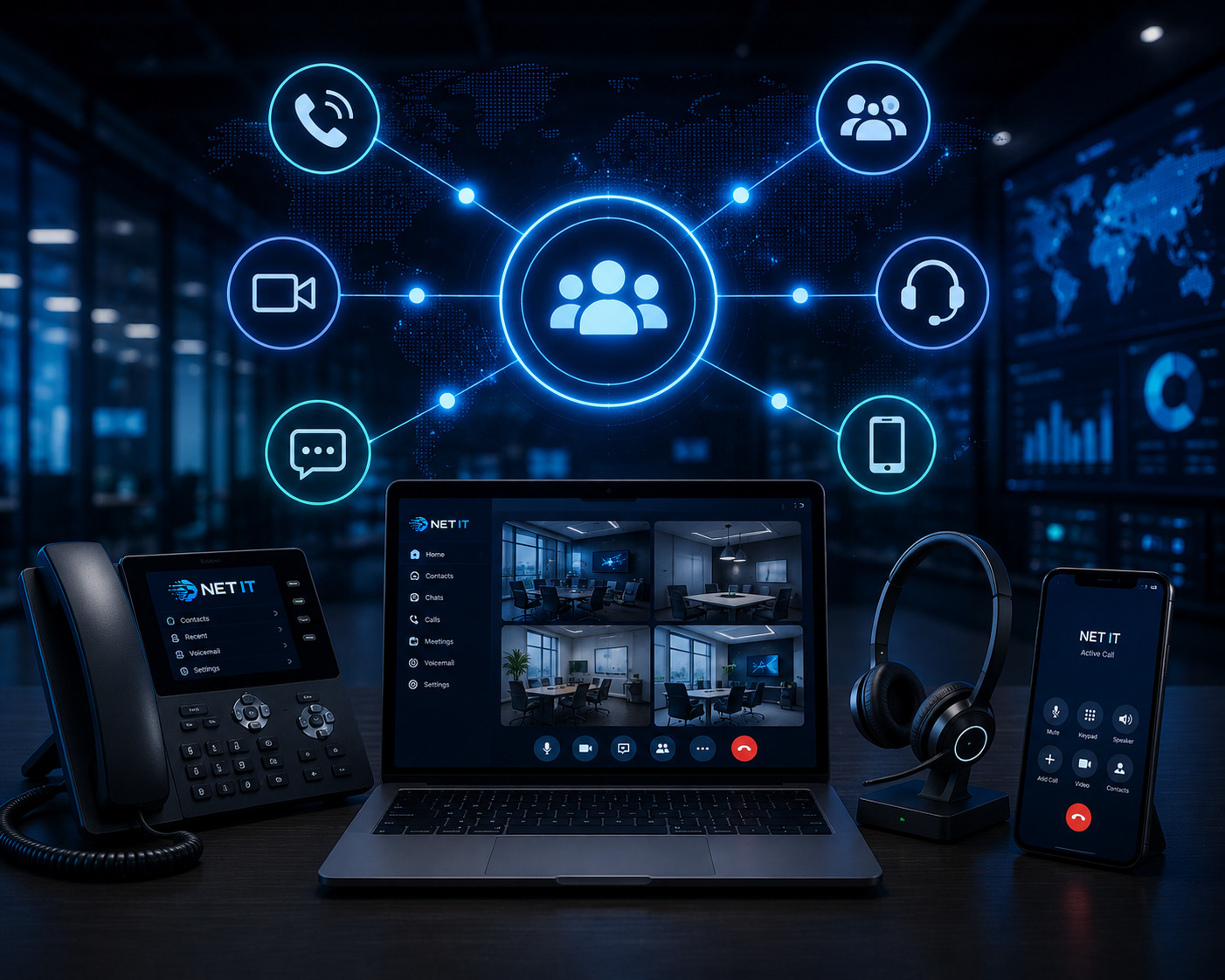
Modern cloud-based phone systems designed for flexibility, scalability, and reliability.
Bring voice, messaging, video, and collaboration together into a single communication experience.
Connect teams, offices, and remote employees through integrated communication solutions.
Improve customer experiences with intelligent call handling and routing strategies.
Enhance communication through modern messaging platforms and customer engagement tools.
Identify overlapping services, aging contracts, and opportunities for cost optimization.
Benefits
Improve The Way Your Organization Communicates
Our assessments help organizations:
- Improve customer responsiveness
- Increase employee productivity
- Support remote and hybrid work
- Simplify communications management
- Improve reliability and business continuity
- Improve business continuity planning
- Scale with organizational growth
Common QUestions
FAQ's
From communications and cybersecurity to cloud infrastructure and AI, NETIT helps organizations identify opportunities, solve challenges, and plan for long-term success.
Business Communications solutions include the technologies and platforms organizations use to communicate internally and externally. This can include VoIP phone systems, unified communications platforms, business messaging, video conferencing, call routing, contact center solutions, and collaboration tools.
Unified Communications brings voice, messaging, video conferencing, collaboration tools, and file sharing into a single platform. This creates a more connected work environment and reduces the need to switch between multiple applications throughout the day.
Modern communication platforms help improve collaboration, customer responsiveness, operational efficiency, and business continuity. Features such as mobile access, advanced call routing, messaging integration, and analytics allow organizations to communicate more effectively while supporting today's hybrid and remote work environments.
VoIP (Voice over Internet Protocol) allows organizations to make and receive phone calls using an internet connection rather than traditional phone lines. VoIP solutions often provide greater flexibility, advanced features, scalability, and cost savings compared to legacy phone systems.
Potential savings vary depending on the size of the organization, current infrastructure, and communication requirements. Many businesses reduce costs associated with legacy phone lines, hardware maintenance, upgrades, and long-distance calling.
Beyond direct savings, cloud phone systems often improve productivity, simplify administration, and provide features that would otherwise require additional software or equipment.
Traditional phone systems rely on physical phone lines and on-premise hardware to make and receive calls. VoIP (Voice over Internet Protocol) uses an internet connection to transmit voice communications, providing greater flexibility, scalability, and access to modern features.
Common signs include rising communication costs, outdated hardware, poor call quality, limited functionality, difficulty supporting remote employees, or challenges scaling as your organization grows. A communications review can help determine whether your current solution is meeting your business needs.
Yes. Modern communications platforms are designed to connect multiple offices, remote employees, and mobile users through a single system, creating a consistent experience across the organization while simplifying management and reporting.
Unified Communications brings together voice, messaging, video conferencing, file sharing, and collaboration tools into a single platform. This helps improve productivity by allowing employees to communicate and collaborate more efficiently regardless of location.
Unified Communications brings together voice, messaging, video conferencing, file sharing, and collaboration tools into a single platform. This helps improve productivity by allowing employees to communicate and collaborate more efficiently regardless of location.
Communication technology can help reduce missed calls, improve response times, route customers to the correct department, provide self-service options, and create a more consistent customer experience across all communication channels.
Many modern communication platforms can integrate with CRM systems, customer service platforms, scheduling applications, collaboration tools, and business software to improve efficiency and provide greater visibility into customer interactions.
Organizations should consider reliability, scalability, security, user experience, remote work capabilities, integration options, reporting features, customer support requirements, and long-term business goals when evaluating communication technologies.
The first step is understanding your current communication environment, operational challenges, and business objectives. NETIT can help evaluate your existing systems and identify solutions that support your organization's communication and customer experience goals.
Ready To Gain Greater Visibility Into Your Technology Environment?
Schedule a conversation with NETIT to discuss your technology goals, challenges, and opportunities.